
Imagine you’ve been trading precious metals for nearly three decades. You’ve seen cycles come and go. You’ve lived through booms, crashes, and long boring stretches where nothing much happens. In 2025, gold is doing exactly what gold is supposed to do which is hitting record highs and rewarding patience.
But then something unusual happens.
Silver, the metal that’s always played second fiddle to gold, starts behaving differently. It breaks a price record that stood for 45 years. Gold is expensive, yes, but silver feels scarce. Not just pricey but scarce. As if inventories are drying up while demand keeps climbing.
For the first time in your career, it feels like the world is genuinely running short of silver.
So what’s driving this sudden frenzy? And why now?
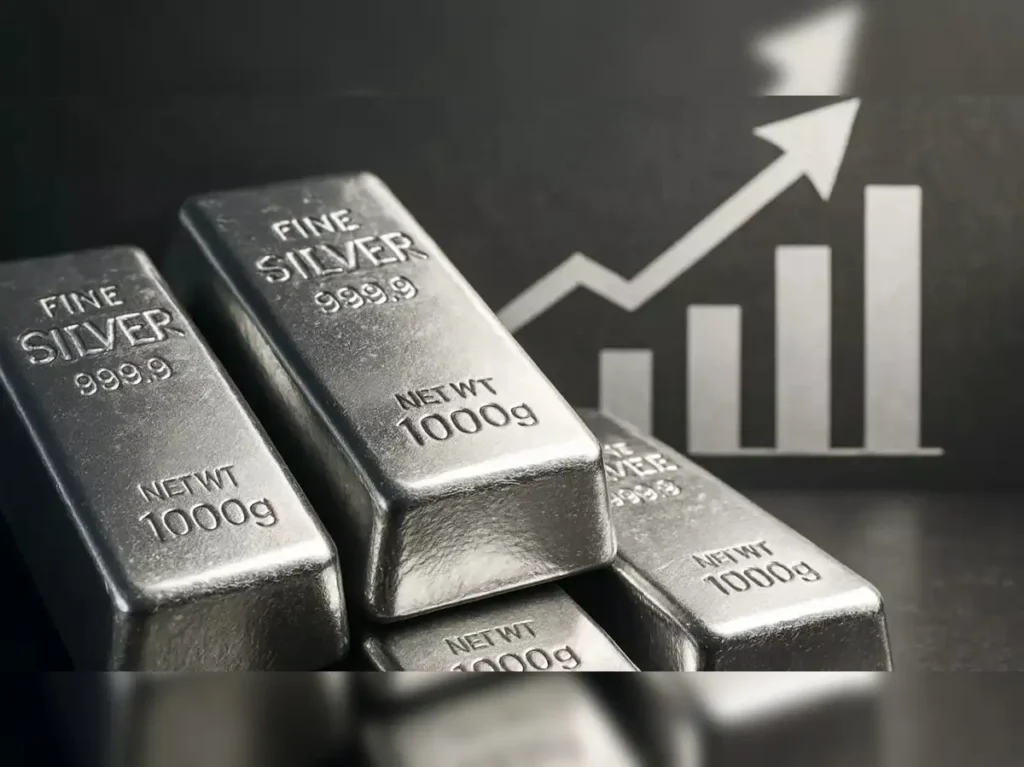
Everyone Suddenly Has a Reason to Buy Silver
At a basic level, silver prices are soaring because demand has been running ahead of supply for years. That imbalance isn’t new. What is new is that in 2025, long term demand collided with a series of short term shocks.
Silver started rushing into the US as traders tried to secure inventory ahead of potential trade disruptions. India’s festive demand surged during Diwali. Add rising geopolitical uncertainty and renewed tariff fears under a Trump led US narrative, and whatever buffer inventories existed were quickly absorbed.
That combination created a squeeze. The kind where price doesn’t just rise, it jumps.
This is why some global banks are now projecting eye-watering numbers. Bank of America, for instance, believes silver could move toward $65 an ounce if the imbalance persists.
But before calling it hype, it’s worth asking an important question.
Silver Isn’t Just Another Gold
Silver behaves very differently from gold. While gold is primarily a monetary and investment asset, silver is an industrial metal first.
That distinction matters.
Gold responds to inflation fears, interest rates, and currency debasement. Silver responds to factories, production lines, and industrial demand. It moves in what’s known as a commodity cycle, driven by how it’s produced and how it’s consumed.
On the supply side, nearly 70% of silver isn’t mined directly. It’s produced as a by product of other metals like copper, zinc, and lead. So if mining activity slows in those sectors, silver supply shrinks too, regardless of silver prices.
On the demand side, electronics, solar panels, and electrical equipment consume large quantities of silver. When these industries accelerate, silver gets pulled in aggressively.
This supply-demand structure makes silver less tied to traditional economic cycles and more vulnerable to sudden shocks. Which brings us to 2025.
A Global Panic, Not a Local One
The silver squeeze isn’t confined to one country. It’s global.
For nearly five years, industrial demand especially from solar energy and electronics has exceeded new supply. Silver’s unmatched electrical conductivity makes it indispensable for renewable energy infrastructure.
Then came policy risk.
Fearing potential tariffs, traders rushed to front-run supply disruptions by shipping massive quantities of silver into US vaults. More than 200 million ounces moved roughly equivalent to four years of US demand.
At the same time, the US government classified silver as a “critical mineral” in its draft list. That single label carries weight. It opens the door to strategic stockpiling, which further tightens availability in commercial markets.
Add investor behaviour to the mix. In India, silver ETF demand surged amid geopolitical anxiety and rising prices. When this coincided with Diwali, a period when buying precious metals is culturally ingrained speculative demand turned into full-blown FOMO.
The outcome was dramatic.
When a Liquid Market Runs Dry
Silver is usually one of the most liquid metals in the world. But in 2025, even that assumption broke.
In London, banks began quoting wildly different prices, something almost unheard of in such a deep market. Major traders struggled to source metal at short notice. JPMorgan, one of the largest precious-metal players, reportedly ran out of deliverable silver in October, with fresh supply only expected weeks later.
Closer home, ETF managers faced the same issue. Some fund houses paused new subscriptions simply because they couldn’t buy physical silver fast enough to back investor inflows.
When demand overwhelms physical availability, prices don’t move politely. They jump.
Which naturally leads to the next question.
Can Supply Ever Catch Up?
In the near term, probably not.
Silver production can’t be switched on overnight. Because it’s mostly mined as a by-product, higher prices don’t immediately translate into higher output. New mining projects take years to plan, permit, and execute.
Meanwhile, trading volumes remain enormous. Daily silver trading in London alone can exceed 250 million ounces. But the actual non-ETF silver available for immediate delivery is estimated to be well below that.
That imbalance is why even modest demand shocks are causing violent price moves.
That said, silver is still volatile. On Diwali itself, prices corrected nearly 6% in a single session, the biggest drop in six months as geopolitical fears briefly eased and investors booked profits.
This is the nature of silver. It doesn’t rise smoothly. It surges, stumbles, and surges again.
What Should Investors Take Away?
Silver’s 2025 rally is a textbook case of how commodity cycles, industrial demand, and investor psychology collide. It’s not just a story of inflation hedging or currency fear. It’s about scarcity meeting panic in an auction-driven market.
Will silver keep rising? Possibly. Especially if supply remains constrained and industrial demand stays strong. But sharp corrections are part of the journey. To read more such stories, follow Alphastreet