

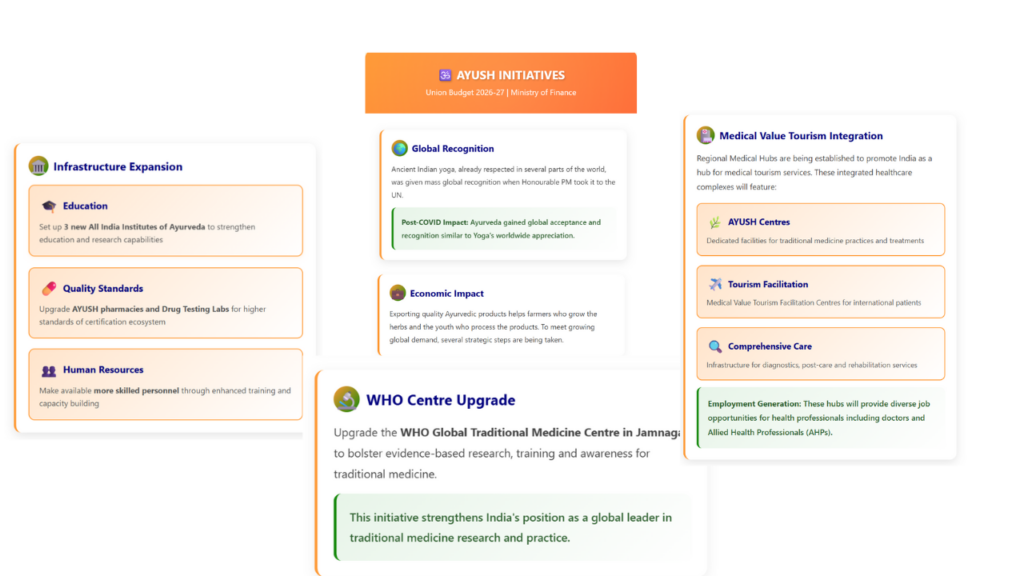
India’s federal budget for 2026–27 proposed a series of measures to expand institutional capacity, strengthen quality standards and deepen research in AYUSH systems of medicine, Finance Minister Nirmala Sitharaman said in her budget speech to parliament on Saturday.
Presenting the proposals, Finance Minister Sitharaman noted that ancient Indian yoga has gained global recognition following its adoption at the United Nations, and that Ayurveda has received wider international acceptance in the post-COVID period. She said growing global demand for Ayurvedic products has implications for farmers cultivating medicinal herbs and for young people engaged in processing these products.
To expand institutional infrastructure, the Finance Minister proposed the establishment of three new All India Institutes of Ayurveda. The budget did not specify locations or timelines, but presented the initiative as part of efforts to scale up AYUSH capacity across the country.
Finance Minister Sitharaman also proposed upgrading AYUSH pharmacies and Drug Testing Laboratories to strengthen the certification ecosystem and improve standards of quality control. According to the speech, the upgrades are intended to ensure better compliance, more reliable testing and the availability of more skilled personnel in the AYUSH value chain.
In addition, the budget proposed upgrading the WHO Global Traditional Medicine Centre in Jamnagar. The Finance Minister said the upgrade is aimed at bolstering evidence-based research, training and awareness related to traditional medicine at a global level.
The speech linked these measures to the objective of supporting exports of quality Ayurvedic products, though it did not provide specific export targets or budgetary allocations for AYUSH. The initiatives were presented alongside broader health-sector measures, including proposals on allied health professionals, caregiver training and regional medical hubs that include AYUSH centres.
Finance Minister Sitharaman said the AYUSH proposals are part of the government’s wider strategy to build human capacity, expand professional pathways and integrate traditional systems of medicine with contemporary healthcare and research frameworks.